
Vehicle Identification Plates & Fleet Labelling Solutions
Weatherproof labels
In today’s transport sector, vehicle identification is about so much more than simply displaying a serial number or fleet code.
The truth is that fleet operators are under increasing pressure to maintain accurate asset records, demonstrate compliance and support digital maintenance programmes, making durable identification labels an increasingly important part of long-term fleet management.
From commercial vehicles and utility vans to specialist machinery and emergency response vehicles, identification labels must remain clear, durable and secure during years of exposure to adverse weather conditions, movement and vibrations, cleaning chemicals and road debris.
Because, when a label falls short, the consequences can range anywhere from small disruptions to daily operations to costly replacements and even the risk of non-compliance with government regulations.
With over 50 years of experience, our team at GSM Graphic Arts understands what it takes to produce vehicle identification plates and fleet labels that stand the test of time.
In this article, we’ll explore why durable vehicle identification plates are crucial for safety and compliance, the materials best suited to the job and why custom resilient labelling is crucial in fleet management.
Why Durable Vehicle Identification Plates Matter
Vehicle identification number plates, or VIN tags, and fleet labels serve both functional and regulatory purposes across a wide range of industries.
While their appearance may seem simple, these labels help to ensure that every vehicle – whether it’s a car, truck, or motorcycle – can be uniquely identified and linked to its associated legal records.
This critical information is used throughout a vehicle’s lifecycle, granting fleet managers a comprehensive picture of the vehicle’s history. In turn, this clear and reliable method of identification enhances traceability and also streamlines maintenance, servicing, and asset tracking processes.
Additionally, permanently legible identification supports compliance with legal standards and operational requirements, which is particularly important in industries such as transport, healthcare, construction and beyond.
Because in these environments, identification labels are expected to perform despite exposure to constant environmental stressors, such as weather, temperature extremes, and abrasion.
The Challenge: Harsh Operating Conditions
Labels attached to working, moving vehicles often face significantly greater environmental challenges than standard product labels.
Exposure is constant, and over time, even minor weaknesses in materials or adhesives can lead to failure.
Common environmental pressures include:
- Rain, moisture and humidity
- UV exposure and sunlight
- Road salt and chemical contamination
- Pressure washing and cleaning agents
- Abrasion from dirt and debris
- Temperature fluctuations
- Mechanical vibration
As time passes, poor-quality labels may begin to fade or become illegible, peel at the edges, warp, lose adhesiveness, and even corrode or deteriorate beyond the point of recognition.
When identification becomes unreadable, significant problems arise. Businesses may face difficulties with tracking their assets, accessing servicing records, MOT inspections or, importantly, compliance verification. Replacing failed labels across a fleet can also become both time-consuming and expensive.
This is why durable identification labels and water-resistant labels are increasingly viewed as long-term operational investments.
Material Selection Makes a Difference
Longevity and durability depend heavily on selecting the right materials for the application and its environment.
And different vehicle types, exposure levels and regulatory requirements will all influence the most appropriate choice for the job.
At GSM Graphic Arts, we believe that material selection is one of the most critical components in delivering reliable identification systems that maintain performance over extended periods of time.
Aluminium and stainless steel plates
For long-lasting identification needs, aluminium and metal rating plates remain one of the most robust solutions on the market.
These plates offer excellent resistance to:
- Solvents
- Abrasion
- Extremes in temperature
- Adverse weather conditions
- The threat of vandalism
At GSM Graphic Arts, we manufacture anodised aluminium data plates, known for their outstanding durability when exposed to conditions underneath the chassis of vehicles, like wagons and lorries. The process of anodising this already strong metal means that the printed ink and information on the label can be locked in and sealed to create a scratch-resistant surface.
Stainless steel nameplates are another durable option for vehicle identification plates. As this material can be etched and filled, they provide excellent resilience in harsh environments, so much so that it can be used on industrial plant vehicles and diggers.
Polyester and polycarbonate labels
As sustainability standards evolve and the transport industry becomes increasingly electric, there is a rising demand for plastic labels.
Where flexibility, detailed print quality or variable data are required, polyester and polycarbonate materials provide a highly durable alternative to metal labels.
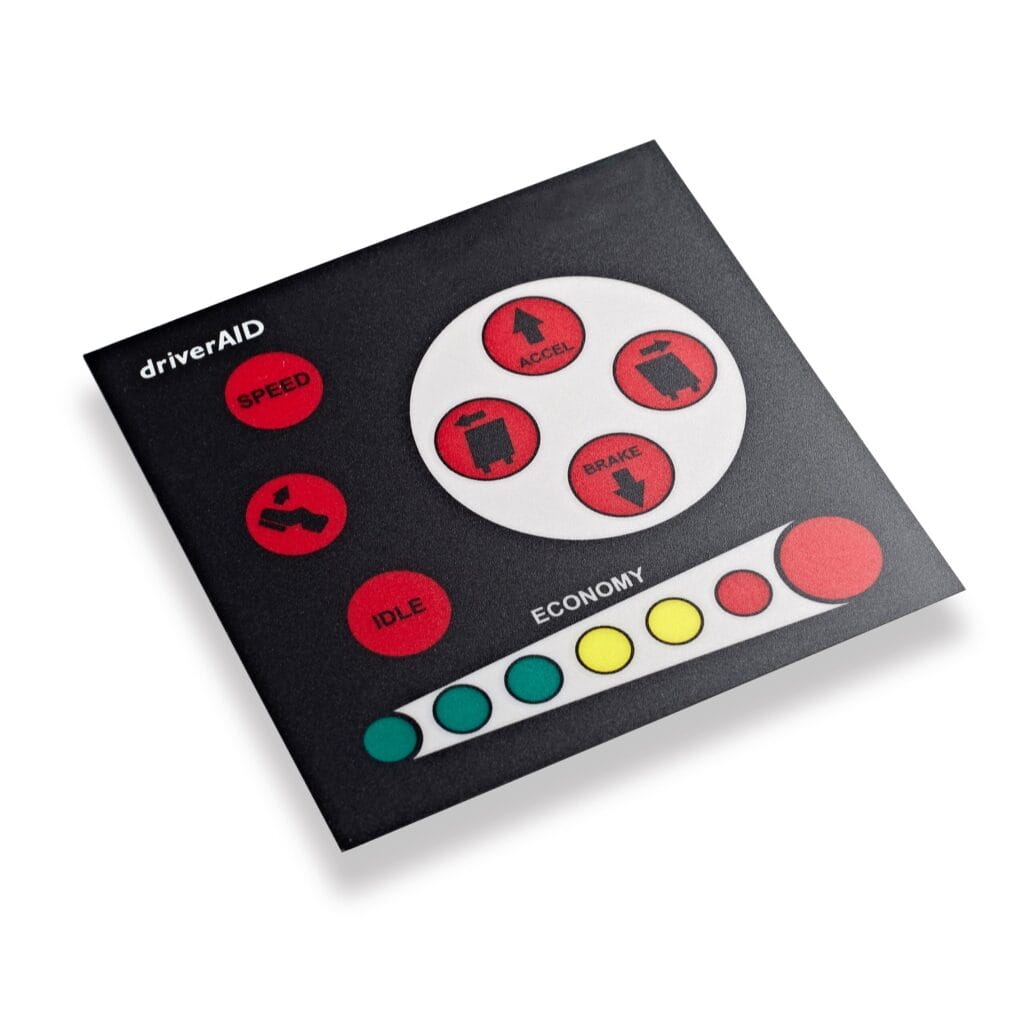
These labels also come with multiple customisation options. Not only can they be serialised for the associated product, but they can also incorporate raised or embossed buttons to house a switch within the vehicle label or overlay.
High-performance synthetic materials can provide strong resistance to water and moisture, oils and fuels, cleaning chemicals, as well as abrasion and scratching.
Combined with industrial-grade adhesives and protective laminates, these labels can continue performing even under frequent washing and outdoor exposure.
The Growing Importance of Tamper-Proof Solutions
For many organisations, vehicle identification is also closely linked to security.
Tamper-proof labels are produced on a self-adhesive material that is known as a ‘destruct vinyl’. This means that once it’s stuck down, the label becomes very difficult to remove.
If removal is attempted, these materials either break down into small pieces or appear torn, leaving behind visible evidence of ‘tampering’.
As traceability and accountability requirements continue to increase, tamper-proof identification is becoming an increasingly important consideration for fleet management operators.
Supporting Compliance & Traceability
Around the world, strict regulations are in place to ensure that all vehicles can be traced and identified. This not only helps to prevent car cloning, vehicle theft and fraud, but also supports the relevant authorities in verifying that these vehicles match up to their documentation.
So, for fleet operators, compliance extends beyond initial vehicle registration.
Identification labels need to remain legible for MOT tests and inspections, maintenance audits, warranty validation and asset verification throughout the service life of the vehicle.
If a label is missing or unreadable, complications arise. A damaged or lost label could indicate that there has been tampering or theft. Vehicle owners are legally responsible for this label remaining intact and visible.
Durability is therefore not simply a matter of appearance; it directly impacts operational reliability and compliance with government regulations.
Custom Fleet Labelling for Operational Consistency
Large fleets often require more than standard off-the-shelf labels.
Consistency across vehicles, equipment and operational sites is essential for both branding and management efficiency.
Tailored solutions allow businesses to standardise identification across entire fleets while ensuring that the labels are suitable for the specific environmental and operational conditions they will face.
Working with an experienced label manufacturer also helps to ensure the optimal combination of material, print process, adhesive and finishing techniques is selected from the outset.
Choosing the Right Identification Solution
Selecting the correct vehicle identification system requires consideration of several key factors:
- Environmental exposure
- Expected lifecycle
- Surface material and application conditions
- Compliance requirements
- Security considerations
- Print durability requirements
A label designed for sheltered indoor equipment will rarely perform as it needs to on externally exposed vehicles operating year-round in challenging conditions.
This is why specification expertise matters.
The correct combination of material, adhesive and print process can significantly extend the lifespan of a label, reduce how often it needs to be replaced and ultimately improve the label’s reliability long-term.
At GSM Graphic Arts, we produce durable identification labels and rating plates that perform with longevity and application suitability in mind. From water-resistant labels and industrial rating plates to tamper-evident fleet identification systems, our solutions are tailored to meet the demands of real-world environments.
Durable Identification Built for Long-Term Performance
Vehicle identification number plates and fleet labels may be relatively small components, but they fulfil a vital role in the world of asset management, compliance and operational efficiency.
By investing in high-quality materials, robust printing technologies and tamper-resistant solutions, organisations can reduce their issues with maintenance, improve their traceability and ultimately support long-term label reliability.
At GSM Graphic Arts, we manufacture and supply robust nameplates using quality materials and state-of-the-art processes, all produced to your exacting specifications.
To learn more about our bespoke identification plates and industrial labelling solutions, get in touch with a member of our team today and discover how we can help.